




























































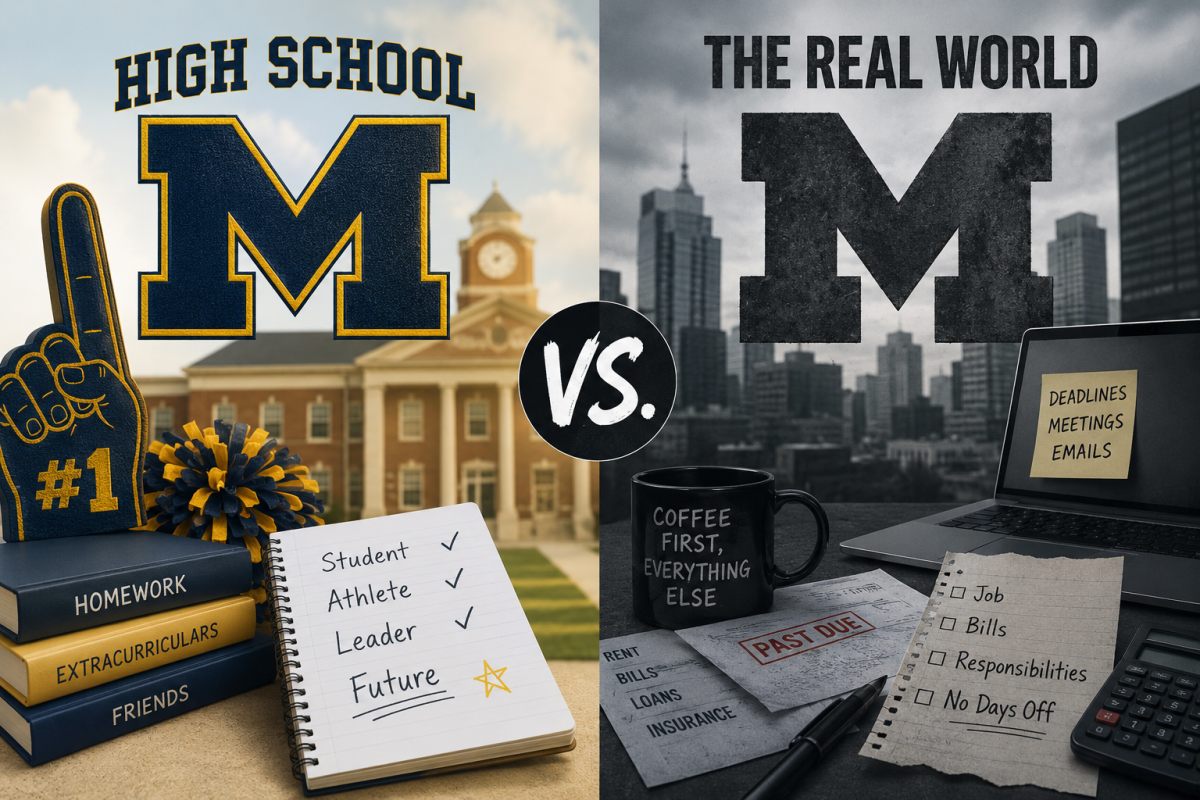
High school grade books are hiding a massive lie wrapped in a single, innocent-looking letter: “M.” At Verrado High School that M is a 40% cushion.
Across the country, that little “M” for missing is a student’s ultimate safety net. It functions like a cosmic pause button in your academic life, a digital placeholder that says, “Hey, you totally blew this deadline, but the world isn’t ending just yet.” Whether you legitimately forgot the assignment, completely blanked on the study guide, or just spent the weekend binging a new show instead of doing homework, the “M” gives you a minute to breathe. It’s a temporary grace period designed to let you turn in late work and save your GPA from a sudden, violent nosedive.
Inside the school walls, the system bends so you don’t break. Teachers nudge you in the hallway, guidance counselors check in, and parents get an automated portal alert. It’s a curated environment built to offer a slight cushion, giving you room to fail, learn, and recover without immediate, permanent consequences.
But out in the real world? That cushion is entirely nonexistent.
While this academic flexibility is meant to teach you responsibility with training wheels, it often winds up doing the exact opposite. It builds a false sense of security. When you can constantly negotiate your way out of a zero, it’s easy to start treating hard deadlines like casual suggestions. You get conditioned to assume there will always be a safety net to catch you, a sympathetic ear to listen to your excuses, and another extension just around the corner.
Once you walk across that graduation stage, however, the training wheels are ripped off. That grace period vanishes instantly.
If you miss a major deadline at a job, your boss isn’t going to log into a portal and hand you a gentle “M.” Instead, they might just hand you a pink slip. In the workplace, missing a deadline means breaking trust with your team and losing money for your company, and in the long run, that means termination.
The same harsh rules apply to your personal life. Paying bills doesn’t come with a friendly reminder from a teacher. Rent is due on the first of the month, period. If you don’t pay it, you aren’t getting a drop-down menu of make-up options; you’re looking at an eviction notice and life without a roof over your head.
Even the immediate step after high school college or technical school offers a brutal wake-up call. Many professors have a strict, zero-tolerance policy for late work. If you miss the submission portal by one minute, it’s a zero. No extensions, no sob stories, and absolutely no chasing you down for the work.
This doesn’t mean the high school system is broken; it means it has a highly specific purpose. The “M” is supposed to be a training tool, a safe space to build solid time-management habits before the stakes get dangerously high. The real trouble only starts when you abuse that flexibility and mistake a temporary warning sign for a permanent guarantee.
The goal is to use the safety net to learn how to balance your life, not to get comfortable falling into it. Because once those graduation caps are thrown and your schedule is no longer dictated by school bells, the cushion completely disappears. In its place is a much colder, less forgiving reality: a world where “missing” isn’t just a temporary placeholder.
It’s final.